Is £60k a Good Salary in London?
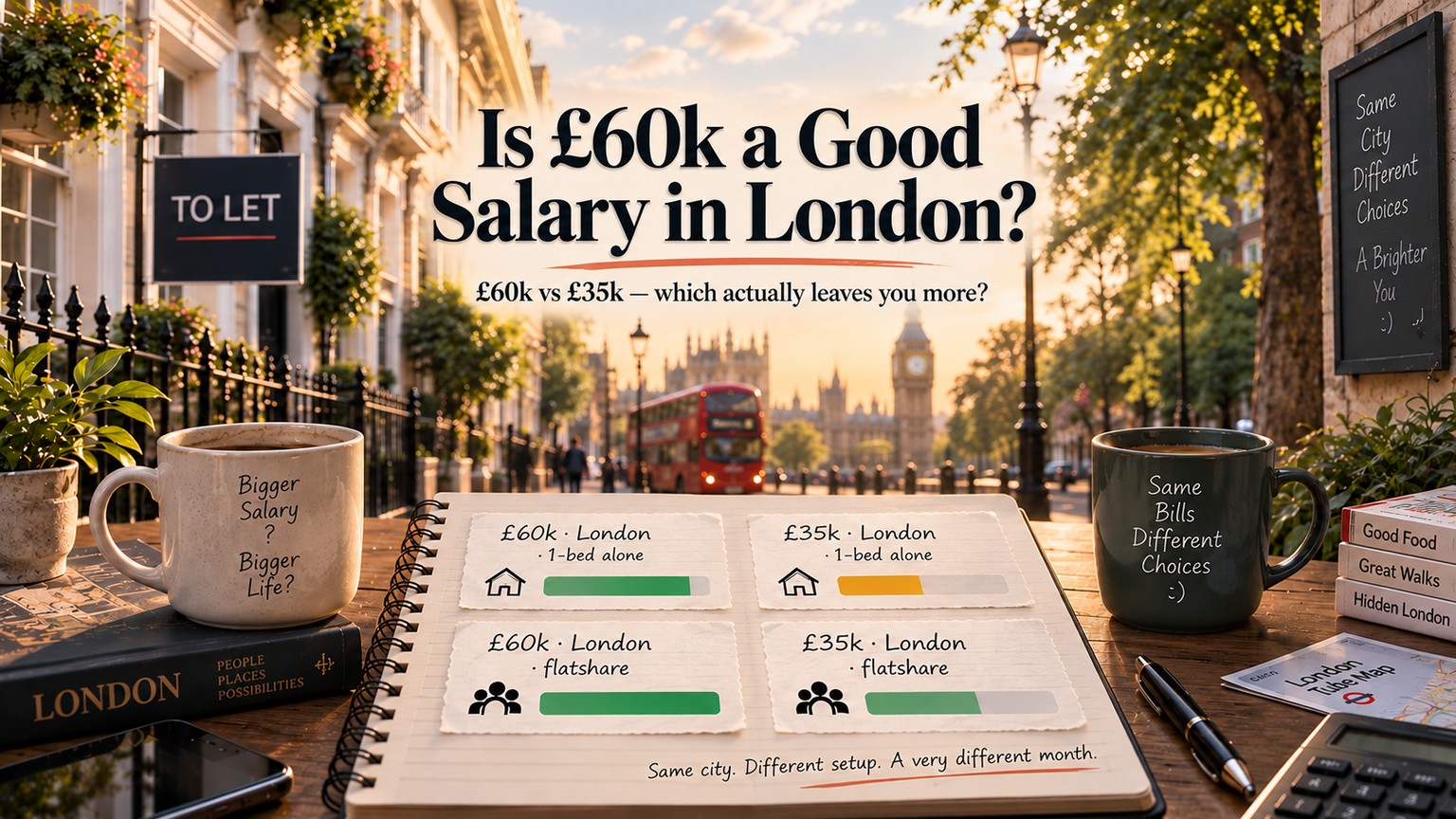
A £60,000 London job next to a £35,000 one somewhere else looks like an easy call. The London number is bigger by £25,000. That's the headline, and it's the part that gets you to read the job ad twice.
Then you start doing sums, and two things cut into that gap. Tax takes a bite, and it grows as the salary grows. London's rent and daily costs take another. Look at what actually lands in your account, then at what's left once the flat is paid for. The two jobs are much closer than the headline suggests.
The job worth taking is the one that leaves you more spare money at the end of the month, in the place you'd be living.
No offer letter warns you about this part. The salary grows, and what you spend in London grows with it. A bigger place, somewhere closer in, a shorter commute, the nicer supermarket, one more night out. None of it feels like a decision at the time, and together it's a life that costs whatever the payslip pays. Tax is only part of what stands between the offer and the reality. The rest is creep.
In this article
- After tax, the gap shrinks
- Then London's costs take their share
- The same flat, two very different months
- What the leftover buys
- The £35k-outside side of the question
- How to run your own version
After tax, the gap shrinks
Gross salary is the number on the offer. Take-home is the number you live on. The two drift apart as the salary rises, because more of each extra pound gets taxed at a higher rate.
Here's how £60k and £35k look once tax and National Insurance come out (England, 2026/27, including the 3% pension contribution our calculator uses by default):
| Salary | Gross / year | Net / year | Net / month |
|---|---|---|---|
| £60,000 | £60,000 | £44,277 | £3,690 |
| £35,000 | £35,000 | £27,880 | £2,323 |
On £60,000 a year, £5,000 a month is the gross figure; £1,310 goes on tax, National Insurance and a 3% pension, leaving £3,690 a month in your pocket. On £35,000 a year, £2,917 a month is the gross figure; £593 goes on tax, National Insurance and a 3% pension, leaving £2,323 a month in your pocket. The gap between the two salaries is £25,000 a year on the offer letter, but only £1,366 a month in the account.
On paper, £60k is £25,000 more than £35k. After tax, the difference is about £1,366 a month. Still a real gap, but the £25,000 headline has lost a lot of its shine before London charges you anything.
You can compare two salaries side by side in the take-home calculator, using your own figures.
Then London's costs take their share
Take-home is only half the picture. What matters is what's left after the place you live takes its cut, and London's cut is steep.
For one person in a Greenwich one-bed, everything for a month comes to about £2,434. That's £1,527 of rent, £200 for transport, and the rest on bills, council tax, food, and the usual odds and ends. The rent is the official average for the borough (ONS figures, April 2026).
That number doesn't care what you earn. The flat costs the same whether you're on £60k or £35k. So your salary decides what's left once it's paid. That's where the two jobs stop looking similar.
One habit worth building early: don't read a pay rise as more to spend. Read it as more left over at the end of the month. That's the number that changes how life feels. Your rent doesn't move when your salary does. What's left over is what moves.
The same flat, two very different months
Put the take-home and the costs together and it gets clear fast. Same person, same Greenwich one-bed, same £2,434 of monthly costs. The only thing that changes is the salary.
| Salary | Net / month | Greenwich costs | Left over |
|---|---|---|---|
| £60,000 | £3,690 | £2,434 | ~£1,256 |
| £35,000 | £2,323 | £2,434 | −£111 short |
Source: England 2026/27 take-home (3% pension); London cost via our calculator, ONS PIPR rents 2026-04.
On £35,000, a month in that flat costs slightly more than a month's pay (about 105% of it).
A one-bed in Greenwich costs £2,434 a month all in. On £60,000 with a one-bed to themselves, £3,690 a month comes in against £2,434 of costs, so £1,256 is left over. On £35,000 with a one-bed to themselves, only £2,323 a month comes in against £2,434 of costs, so the month finishes £111 short.
On £60k, you've got roughly £1,256 spare each month after everything. On £35k, in the very same flat, you're £111 short. Not £111 tighter — £111 under, before anything goes wrong. No missed payslip, no boiler repair needed: the month already doesn't close on its own.
The gross salaries are £25,000 apart. After tax that shrinks to about £1,366 a month. And once London's fixed costs come out, almost all of that difference shows up as spare money: what one job leaves you and the other doesn't.
£60k in London — see where it goes
Mini scenario (example)
Single • Greenwich • 1-bed • £3,690 net
On £35k (£2,323 a month after tax), the same flat leaves nothing: you finish £111 short. Same rent, same city. The salary is the only thing that moves the leftover, and at £35k it doesn't move it far enough.
Run both salaries against the same flat and see the gap for yourself.
Compare two salaries →The lines add up to about £2,434. Rent and transport are fixed; the rest spreads across bills, council tax and food.
What the leftover buys
A buffer decides how often a normal month turns into a stressful one.
With around £1,256 spare, you can save steadily, cover a surprise bill without it ruining the month, and say yes to a plan without doing sums first. On £35k there's nothing to protect. The money runs out before payday. On paper the flat looks almost affordable; in practice you start every month in the red and need something to fill the gap: overtime, savings, or a cheaper place.
Our longest guide comes at the same gap from the other side. Is £3,000 a month enough to live in London lands on the same idea: what you need to earn depends first on what the flat costs. The £60k single here clears £3,000 after tax comfortably; the £35k one doesn't get close.
If you earn somewhere between these two, is £50k enough to live in London sits in the middle and shows what's left over there. And if the rent is what's eating everything, rent vs commute: why the cheapest borough isn't always cheaper is worth a look before you assume a cheaper flat fixes it.
The longer you live here, the more you learn: the right places, the cheaper routes, the small tricks that take the edge off. Or you spend it the other way as the salary rises, on better places and corners of the city you hadn't tried. Either way, it helps to give the spare money a job: a deposit, a number with a date on it. A buffer with a purpose is far easier to protect.
The £35k-outside side of the question
All of that comes from official figures and our own calculator: the salary gap shrinks after tax, and London's costs eat most of what's left.
The other half is what £35k actually feels like outside London, and that depends on costs our calculators don't cover. They're built for London, so we won't guess at a rent or a shopping bill somewhere else and pass it off as fact.
What we can pin down is the rent, from the same source we use for London. ONS puts a one-bed in Manchester at around £989 a month, against £1,527 for the Greenwich flat above. That's roughly £538 a month less on the biggest bill of all. Council tax, transport and the weekly shop tend to run lower outside London too. The amounts vary too much for us to put one figure on them.
The take-home is the easy part. On £35,000 you keep £2,323 a month wherever you live; tax is the same in Leeds as in Greenwich. What matters is whether a cheaper flat outside London leaves more of that £2,323 spare than £60k leaves of its £3,690 here. Often it does. The smaller salary in the cheaper place wins on spare money, even though the bigger one wins on the payslip.
And there are more options than a one-bed alone. Take a flatshare instead and the same £35k ends the month about £634 spare, where the one-bed left it £111 short. That's a £745 swing from one decision. It doesn't reach the £60k figure, and it can't. Transport, food and the day-to-day run to about £520 a month per person, and sharing a flat splits none of that. What a flatshare buys you is the difference between finishing the month with money left and finishing it short. Neither is the wrong call. It depends what the money's for, and what you'll trade for a front door of your own.
Flatshares pay off on £60k just as much as on £35k. The same room lifts the leftover from about £1,256 to about £2,001. It's the same £745, because what changes is the flat, not the salary. A buffer that size buys choices: a deposit that builds month on month, or a move closer in. Closer in can cost less than it sounds: a room in a Camden two-bed comes to less, all in, than the Greenwich one-bed.
A one-bed in Greenwich costs £2,434 a month all in. On £60,000 with a one-bed to themselves, £3,690 a month comes in against £2,434 of costs, so £1,256 is left over. On £60,000 with a flatshare room in a two-bed, £3,690 a month comes in against £1,689 of costs, so £2,001 is left over. On £35,000 with a one-bed to themselves, only £2,323 a month comes in against £2,434 of costs, so the month finishes £111 short. On £35,000 with a flatshare room in a two-bed, £2,323 a month comes in against £1,689 of costs, so £634 is left over. The flatshare room is estimated as half the two-bed ONS rent, with bills and council tax split; transport, food and day-to-day costs are per person and are not split, which is why sharing never closes the whole gap.
A one-bed is the most expensive way to rent a room in London. In Greenwich, a one-bed to yourself is £1,527 a month. Its two-bed works out at £944 a room, and its three-bed at £729. The first sharer does most of that work, taking £583 off the rent; a third adds another £215. Council tax and bills split the same way. A four-bed doesn't save you any more: after three bedrooms, the price per room stops falling.
If sharing isn't for you, a studio is the cheaper way to live on your own: about £293 a month below the one-bed. That's enough to wipe out the shortfall on £35k and leave a little over. ONS publishes no studio figure, so that one is our own estimate from the one-bed. And the trade-off is real: you sleep, cook and live in one room.
That's the trade the headline numbers hide. Moving to London for the bigger figure can still leave you with less spare each month than a smaller figure somewhere the rent is lower. If you're weighing exactly this, moving to London from abroad: what your salary really covers runs the same maths for someone starting from zero. First flat, first bills, nothing set up here yet.
Families face the same maths, only tighter. The buffer thins faster when other people depend on it, and can a family of four afford London: the real monthly number runs that version of the comparison.
How to run your own version
The figures here are one flat in one borough. Yours will differ, and the exact pounds matter less than the shape: the salary gap shrinks, London's costs don't, and what's left is yours.
Three checks worth doing before you decide:
- Run both offers through the take-home pay calculator so you're comparing what lands in the account, not the headline.
- Price the flat you'd take, not a borough average: rent, bills, council tax, transport.
- Use the area suggestion tool to find where your budget leaves the most room.
The people who feel steady in London aren't the ones on the biggest salaries. They're the ones who ran the numbers before the move instead of after it. Two minutes with your real figures now beats finding out in month three that the buffer was never there.
Run it with your own numbers: your salary, your flat, your borough. Put them through the cost-of-living calculator, and decide on purpose.
These are estimates to help you plan, not financial advice. For the full caveats, see our disclaimer.